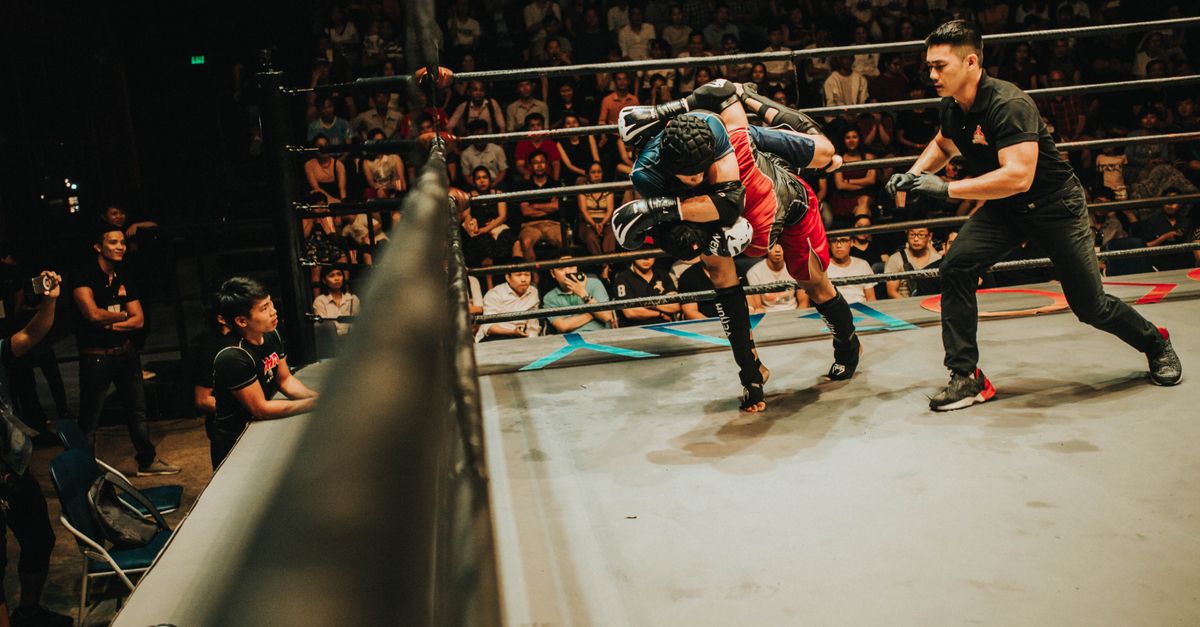
The Professional Fighters League has thrown out its format twice since 2024, and at the end of 2026 it changes its name as well. If you last paid attention when it was the MMA league with a regular season and $1 million prizes, a lot has moved since.
The original idea: a season with playoffs
The PFL launched in 2018 with a format borrowed from team sports. Its first season had 72 fighters in six weight classes, 12 per division. Fighters had regular-season bouts from June to August, the top eight in each class went to playoffs in October, and the six champions were crowned on December 31. Each champion took a $1 million purse out of a $10 million prize pool. In the 2018 playoffs a fighter had to win twice in one night to reach the final.
The standings ran on points. A win was worth three points, a draw one and a loss nothing. Finishes earned extra points on top: three for a first-round stoppage, two for the second round and one for the third. A fighter who missed weight took a one-point penalty and could not score from the bout, and if the fight still went ahead, 20 percent of that fighter's purse went to the opponent.
The league trimmed the format in 2021. Each fighter had two three-round bouts in the regular season, and only the top four in each division reached the playoffs, which became a single semifinal instead of two fights in one night. The final was a five-round fight, still for $1 million. One rule set the PFL apart from most of MMA in those years: no elbow strikes at all, standing, in the clinch or on the ground.
Bellator and the 2025 World Tournament
On November 20, 2023, the PFL bought Bellator from Paramount Global. The 2024 season mixed in fighters from Bellator and PFL Europe, and the playoffs again took the top four in each of six divisions, 24 fighters in all, toward a $1 million final.
For 2025 the season was replaced by a single-elimination World Tournament, announced on January 15, 2025. Eight weight classes (heavyweight, light heavyweight, middleweight, welterweight, lightweight, featherweight, bantamweight and women's flyweight) each had an eight-fighter bracket, so 64 fighters started. Winning a division meant three wins in five months: a first-round fight in April, a semifinal in June and a final in August. First-round fights and semifinals were three rounds, and finals were five. Each tournament winner received a $500,000 bonus, and the league put total prize money at more than $20 million. The same announcement dropped the old ban: elbows were allowed at every PFL event from then on.
The tournament rulebook had a few details of its own. Fighters got a one-pound allowance on the scale in the first round and the semifinals, but none in the final. If a bracket fight ended in a draw, the three judges were each asked to pick the fighter with the more complete body of work, and the fighter picked most often advanced, as long as the local commission approved the process. If it did not, the fighter ahead on the combined scorecards for the third round went through, then the second round, and so on. A coin toss was the last resort.
Alongside the brackets, the PFL started naming world champions. At PFL Lyon on December 13, 2025, Vadim Nemkov submitted Renan Ferreira with an arm-triangle choke to become the first PFL heavyweight world champion, and Cris Cyborg beat Sara Collins for the women's featherweight world title.
2026: one world champion per division
The 2026 calendar, announced on November 18, 2025, had 24 events: 16 global events shown on ESPN in the US and eight regional events split evenly between Africa and the Middle East and North Africa. The global cards are built around individual matchups instead of brackets. In January 2026 the league added official rankings. They are run by an outside company, Combat Registry, from ballots cast after each event by a panel of MMA journalists and industry experts. The top ten are listed in nine rankings, one of them a men's pound-for-pound list, and each champion is shown above the division.
Titles are now won and defended the way they are in most promotions. Cyborg kept the women's featherweight title in Tampa on August 22, 2026, beating Ketlen Vieira on scores of 49-46, 49-46 and 48-47. The first PFL women's flyweight world title is on the line in Chicago on October 16, when Liz Carmouche meets Jena Bishop again. Carmouche won their first meeting, the 2025 tournament final. Nemkov defends the heavyweight title against Sergei Bilostenniy in Dubai on November 14.
The regional leagues kept the bracket. PFL Africa's 2026 season has semifinals at heavyweight, welterweight, featherweight and bantamweight, and PFL MENA runs its own season for fighters from the Middle East and North Africa.
The name is changing to MVP
On July 30, 2026, the PFL and Most Valuable Promotions (MVP), the boxing company founded by Jake Paul and Nakisa Bidarian, announced a merger. The combined company runs under the MVP name, with the PFL's chief executive, John Martin, as CEO, and the PFL roster and events form the base of MVP MMA. The PFL says its December 19 card in Lyon, where Taylor Lapilus and Mitch McKee fight for the first PFL bantamweight world title, is the last event under the PFL banner. From January 1, 2027, the events carry the MVP name.
How the PFL differs from the UFC
Inside the cage the differences are now small. Both promotions follow the rules of the athletic commission where each fight takes place, which in the US means the Unified Rules of MMA, and since 2025 the PFL allows elbows like the UFC does. The PFL supplies gloves between four and six ounces, and its fights take place in what it calls the SmartCage, which collects tracking and biometric data from the fighters for its broadcasts.
The bigger differences are around the fights, starting with size. When the UFC signed its current US media deal in 2025 it ran about 43 events a year with a roster of roughly 600 athletes. The PFL planned 24 events in 11 countries for 2026, with more than 300 fighters.
For most of its history the PFL decided champions by results, through a points table or a bracket, so a fighter's path to the final was set months in advance. The UFC picks title fights through matchmaking, with its rankings as a guide. The PFL's 2026 model sits much closer to the UFC's, with the difference that its rankings are run by an outside company.
The PFL's selling point was prize money for winning a season or a tournament: $1 million for a season champion, $500,000 for a 2025 tournament winner. The UFC pays fight purses and hands out Performance of the Night and Fight of the Night bonuses at its events. And in the US the two sit on different services, the UFC on Paramount+ with some numbered cards on CBS, and the PFL on ESPN.
Our MMA schedule includes PFL events when they are listed, next to the UFC and other promotions, with start times in Eastern Time. For how the UFC splits its own calendar, see UFC numbered events vs Fight Nights.